Faces of Zebratown
This is the second year in a row that I have had the privilege of working with students at the Elmira Alternative High School on an arts in education project where they read a book and use it as a point of departure for their own poetry and visual art. This year the book they have been reading is the intense true story of Kevin Davis called Zebratown. It is written by Greg Donaldson and set mostly in Elmira, New York. Elmira is home to a maximum security prison that houses inmates from all over New York state. From the prison, Kevin Davis looks down on the town of Elmira and thinks it looks peaceful and imagines living there in freedom one day. Eventually he does. Zebratown focuses on a part of his life where he moves in with a white single mom and their struggle to make their lives and relationship work.
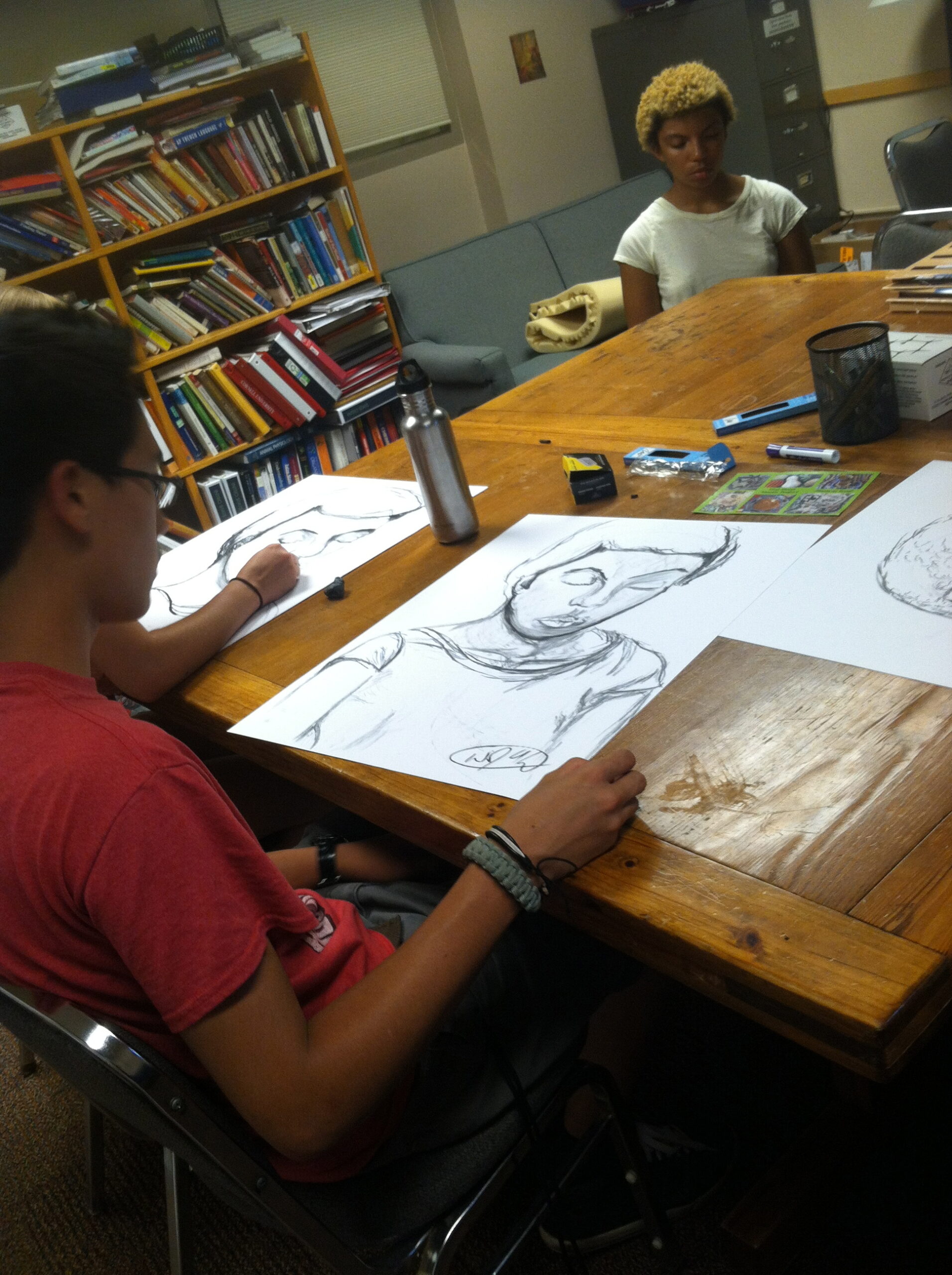
The book was hugely engaging and I read it in three days. But when I finished, I felt thoroughly depressed. I sat down and started making notes about the values of the main characters in the story, making thumbnail sketches to represent these values and try to make sense of this work of tragedy. I was thinking about representing a person by showing the layers of experience, the goals, dreams and values, as well as an image of their physical presence; a personal palimpsest. When I met with students on the first day, I asked them to make some simple sketches of their values and I gave a lesson in drawing faces using charcoal. Later we would combine these images using paint on canvas.
Drawing Plants
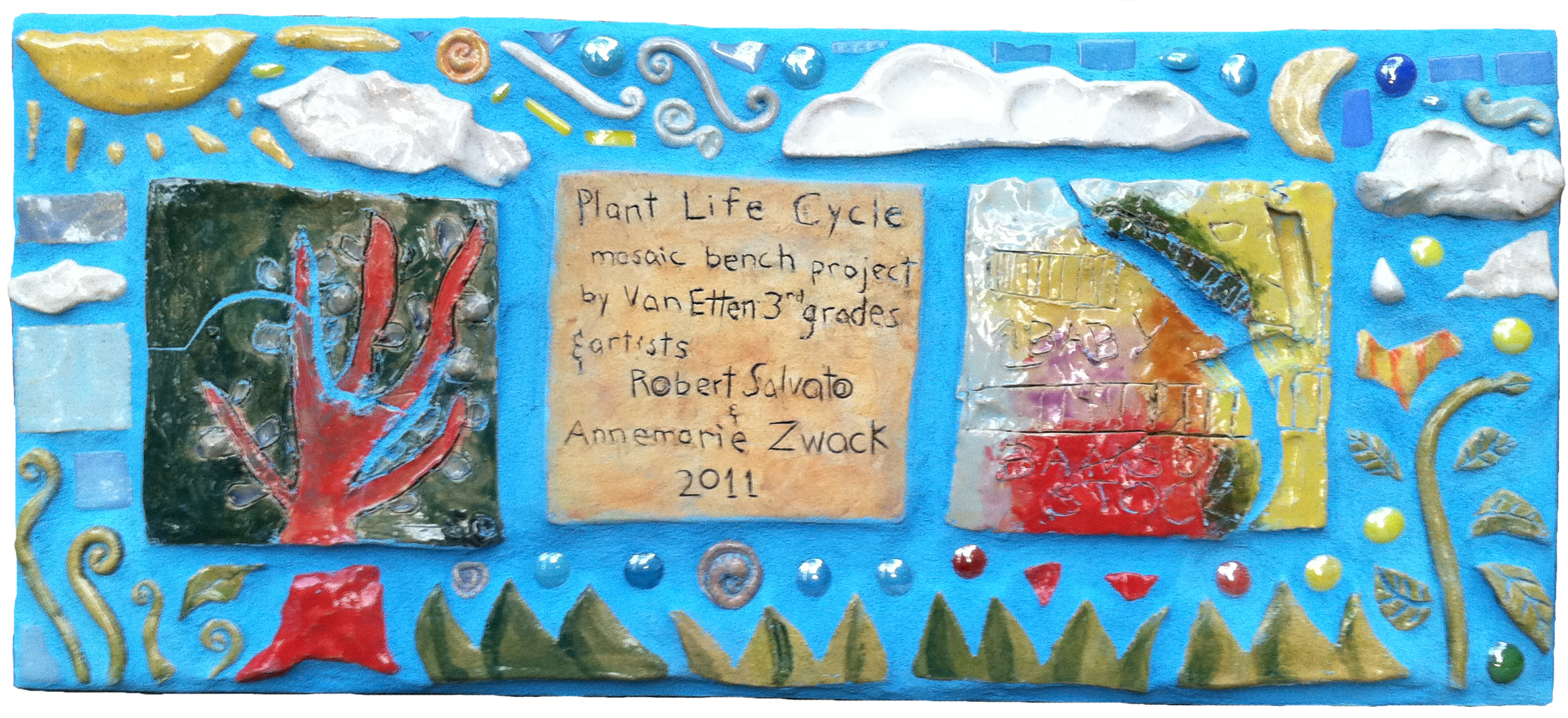
This past Wednesday, I met with four classes of third graders at Van Etten elementary school in Van Etten, New York. We talked about the fact that both scientists and artists need to use their skills of observation in their work. We used pencil, colored pencil, and crayons to draw plant specimen that the students had brought in from home. These will be the designs for the clay tiles that they will be sculpting next Wednesday.
This project was made possible in part through a Local Capacity Building Grant administered by The ARTS Council of the Southern Finger Lakes.
Drawing – Middle School in Spencer, NY
As you may have noticed on the calendar, I’ve been teaching a drawing class at the local Middle School after school. I was inspired by the snowy landscape here in rural central New York state. Sometimes the skies are much darker than the earth all covered in snow. The bright white of snowy ground is emitting more light than the sky itself! Perfect to draw in charcoal. I love how charcoal smudges. It can be intensely dark or sublimely faint and subtle. Charcoal is as old as fire, and is a completely non-toxic art material. Our first class together I had students make gradations from the lightest marks they could make to the deepest dark they could muster with many smoothly blended steps in between. They then cut these up and made the value matching tool you see in the pictures. They observed the landscape outside their school and made these sketches.
Chemung River School Project
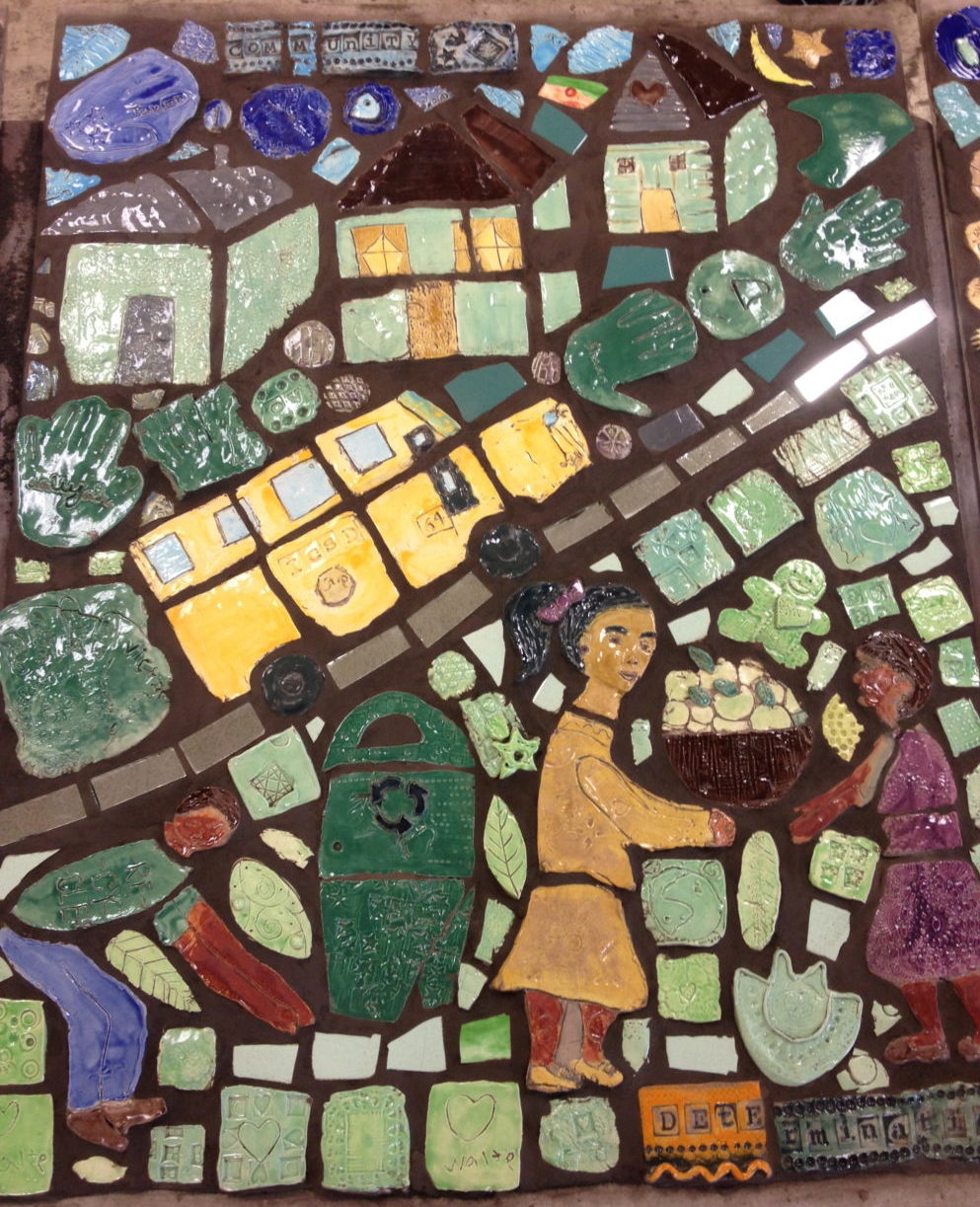
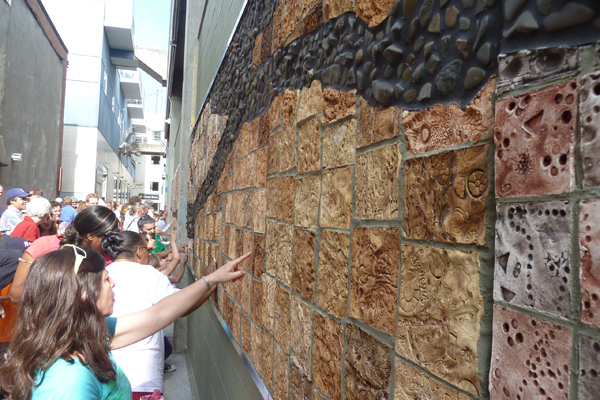
This is the third year in a row that I have had the privilege of being the artist in residence for the Chemung River School Project. Each year, naturalists and a poet visit with fourth graders. They get to go to the Arnot Art Museum, the History Center, and the Tanglewood Nature Center as part of a cross disciplinary study of the Chemung River that flows through Elmira, NY. This year, in what we hope is a pilot for a larger public art mosaic project, like we did in Ithaca in 2010, students made clay tiles out of raw clay using low relief sculptural techniques to describe their experience of the river. Here are some pictures of the process. There were seven classes from three schools that participated.
Fairy Huts in Whangerei
Fairy Hut Building at the Natural Phenomena Conference in Whangerei, NZ was fantastic! The whole conference took place outdoors and was dedicated to nature education for early childhood in New Zealand.
I lead a workshop with about 20 participants, most of whom were early childhood educators, in creating ephemeral, environmental installations, or FAIRY HUTS! The materials that were right at our feet were blossoms from the trees in the remarkable old growth forest, nuts, berries, fabulous mosses, fallen bark, twigs, and leaves, grasses and meadow flowers from the clearings, and even clay from down the hill in the creek.